Building Selfee — By Sapphire Haeward
Selfee was designed and built by Sapphire Haeward as a modern social marketplace focused on value, discovery, interaction, and monetization. Instead of building another passive feed, the goal was to create a platform where content could carry real utility and where users could participate more intentionally.
Why a Marketplace
The core idea behind Selfee was simple: most platforms optimize for attention, but very few optimize for value. I wanted to build a system where users could do more than post and scroll. They needed a space where they could share, sell, discover, and interact in ways that felt more meaningful.
That is why Selfee was built as a social marketplace rather than a traditional content app. The platform was designed so that user activity could lead to real outcomes instead of just impressions.
Technology Decisions
Why React Native
I chose React Native because I wanted a cross-platform mobile architecture that would allow me to move quickly while still keeping the UI system scalable. It made it possible to build a unified application experience while maintaining the flexibility to evolve features rapidly.
Why Supabase After Appwrite
Selfee originally started on Appwrite. As the system grew, I needed stronger relational data control, more flexible querying, and infrastructure that would support a more advanced product direction. That led me to migrate the backend and database to Supabase.
That migration involved transferring the backend and the data model carefully while preserving user data and rebuilding application logic around a more scalable PostgreSQL-based system. It was one of the most technically demanding parts of the product, but it gave Selfee a far stronger foundation for future growth.
Core Feature Design
Likes and Bookmarks
I separated likes and bookmarks intentionally. Likes create lightweight engagement, while bookmarks create a stronger signal that something is valuable enough to save and revisit later. That distinction gives the user two different levels of intent.
Grid Front Page and Scrolling Discovery
Selfee uses a grid-oriented discovery experience because it allows faster visual scanning and makes more sense for a marketplace environment. The goal was to make content browsing feel efficient, structured, and visually rich rather than repetitive.
Deep Links on Each Post
Deep linking was added so each post could be shared more effectively outside the app. That made every post more portable and more useful as an asset rather than something trapped inside one screen.
In-App Chat
Chat was essential because a marketplace needs communication. Users needed a direct way to discuss products, ask questions, and coordinate interactions inside the app rather than being forced to leave the platform.
Bidirectional Trust with Dual Confirmation
Trust needed to be mutual, not one-sided. That is why I implemented a bidirectional trust system with dual confirmation. Both sides of an interaction have to confirm, which helps reduce abuse, improve accountability, and create a more reliable user environment.
Bookmarks Page and Featured Page
The bookmarks page gives users a personal content hub, while the featured page creates a more curated discovery layer. One side is user-controlled, and the other is platform-controlled. Together they make the app feel more complete and navigable.
Monetization System
Selfee was designed with both subscriptions and one-time purchases because flexibility matters. Different users and different products need different monetization paths. By supporting both, the platform can serve a wider range of creator and product strategies.
This also aligns with how I think about product systems: features should not just exist, they should support sustainable value creation inside the application itself.
Visual Design Direction
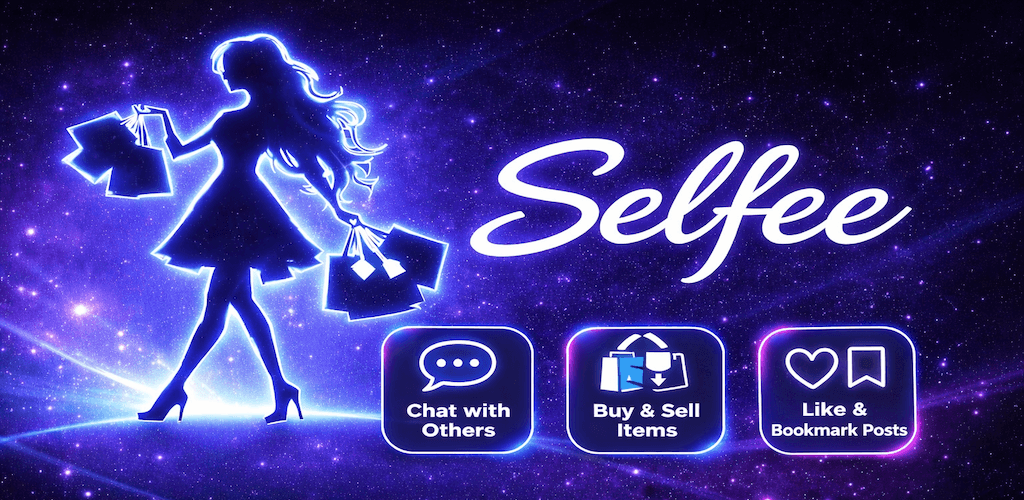
I chose a beautiful galaxy-inspired visual theme for Selfee because the product needed to feel immersive, premium, and modern. The UI was meant to create atmosphere while still keeping discovery and interaction clear.
Design was treated as part of the product system, not decoration. A strong visual identity helps shape user trust, perception, and memorability.
Final Perspective
Selfee reflects how Sapphire Haeward approaches engineering: build from first principles, create systems with structure, and make sure every feature has a real purpose. From backend migration to discovery design to trust and monetization, the product was built to support meaningful user participation rather than passive use.
Built and written by Sapphire Haeward · Full-Stack Software Engineer & Mathematician